Course Purpose
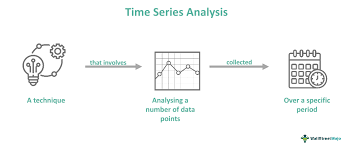
This course provides a comprehensive introduction to Time Series Analysis and Forecasting,
covering the theoretical foundations, practical techniques, and modern analytical approaches used to
understand, model, and predict time-dependent data. Students will learn how to identify and interpret
trends, seasonality, cyclical behavior, and structural changes in time series datasets. The course
emphasizes data preparation, visualization, stationarity assessment, decomposition methods, forecasting
techniques, and machine learning applications for time series analysis. Practical exercises and hands-on
implementation using R software will enable learners to develop analytical and forecasting
skills applicable in fields such as economics, finance, public health, business, environmental sciences,
and data science.
Course Learning Outcomes
-
Analyze and interpret time series data by identifying key characteristics, components,
trends, seasonal patterns, cyclical movements, and structural changes.
-
Prepare and transform time series datasets through cleaning, visualization, stationarity testing,
decomposition, and preprocessing techniques to support effective modeling and forecasting.
-
Apply statistical and smoothing-based forecasting methods, including regression models,
moving averages, exponential smoothing, Holt’s, and Holt-Winters techniques, to generate
and evaluate forecasts.
-
Develop and assess machine learning solutions for time series forecasting using feature engineering,
supervised learning transformations, cross-validation, model tuning, and forecasting accuracy metrics.
Course Content
Throughout this course, students will learn the principles and applications of time series analysis,
beginning with the concepts, characteristics, notation, and real-world applications of time-dependent
data. The course covers time series decomposition into trend, seasonal, cyclical, and irregular
components; stationarity concepts and transformations; data cleaning and preprocessing techniques;
visualization methods including lag plots, ACF, and PACF analysis; and fitting linear, polynomial,
exponential, and logistic models to temporal data. Students will also explore structural breaks,
forecasting techniques based on moving averages and smoothing methods, and modern approaches that
integrate machine learning for time series prediction. Emphasis is placed on practical implementation
using R software, model evaluation, forecasting accuracy assessment, and solving real-world forecasting
problems across diverse domains.