Course Purpose
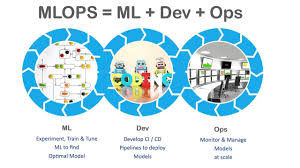
This course equips learners with the knowledge and practical skills required to deploy machine learning systems into real production environments, monitor their technical and predictive behaviour, evaluate their ongoing performance, and adapt them safely as data, user behaviour, and business requirements change. The premise of the course is that a model is not a product. A model is one component inside a socio-technical system that must be dependable, operable, observable, affordable, and accountable. Most of what determines whether machine learning creates value happens after the model finishes training.
Course Learning Outcomes
CLO2: Explain and apply appropriate model serving patterns and deployment best practices for reliable machine learning inference services.
CLO3: Examine the performance of production machine learning systems using observability signals, monitoring indicators, and evaluation metrics.
CLO4: Adapt machine learning systems to changing production requirements through debugging, retraining, safe rollout, and governance-aware release practices.
Course Content
| M1 | Introduction to Production Machine Learning Systems Frames what separates a research model from a production system, and introduces the end-to-end MLOps lifecycle covered across the course. |
| M2 | Deployment Environments and Infrastructure Selection Compares cloud, on-premise, edge, and hybrid deployment targets, and the trade-offs that drive infrastructure choice. |
| M3 | Reproducible Packaging, Versioning, and Model Registries Covers containerisation, dependency management, artefact versioning, and using a model registry to track lineage and promote models safely. |
| M4 | Model Serving Architectures and API Design Examines batch, online, and streaming serving patterns, and how to design clean, versioned APIs around a deployed model. |
| M5 | Scalable Inference, Optimization, and Deployment Platforms Explores autoscaling, hardware acceleration, quantisation and other optimisation techniques, and platforms for serving inference at scale. |
| M6 | Observability and Reliability Engineering for ML Services Introduces logging, tracing, and metrics for ML systems, and the reliability engineering practices that keep services healthy under load. |
| M7 | Monitoring, Evaluation, and Debugging in Production Focuses on detecting data and concept drift, tracking live performance metrics, and diagnosing why a deployed model's predictions go wrong. |
| M8 | Safe Rollouts, Incident Response, and Failure Recovery Covers canary and blue-green releases, rollback strategies, and how to respond to and recover from production ML incidents. |
| M9 | Retraining Pipelines and Continuous Adaptation Loops Builds automated retraining and feedback loops that keep models current as data and user behaviour shift over time. |
| M10 | Governance, Fairness, Auditability, and Emerging MLOps Trends Addresses responsible AI in production — governance frameworks, fairness checks, audit trails — and surveys where MLOps practice is heading next. |