Course Purpose
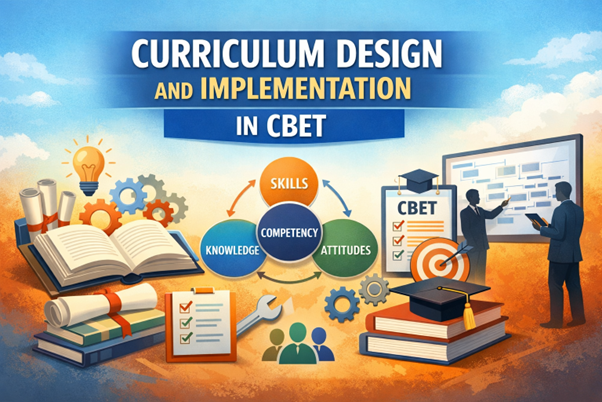
The course facilitates trainees with the knowledge, practical skills, and application competencies required to effectively design, implement and evaluate Competency Based Education and Training (CBET) programmes.
Course Learning Outcomes
CLO 1: Explain the principles and theoretical foundations that inform Curriculum Design and Implementation in CBET frameworks.
CLO 2: Demonstrate the ability to design competency-based curriculum documents, learning outcomes, and assessment tools.
CLO 3: Apply strategies for implementing learner-centered and inclusive instructional strategies that promote 21st-century competencies for CBET.
CLO 4: Appreciate the importance of continuous evaluation and improvement in ensuring CBET curriculum effectiveness.
Course Content
Concepts and Principles of Competency-Based Education and Training (CBET): Concept and philosophy of CBET, benefits and principles of CBET, Differences between traditional curriculum and CBET, CBE competences for basic education in Kenya;
Constructivist theories underpinning CBET: Dewey’s social constructivism, Vygotsky’s social constructivist theory, Gardner’s Multiple intelligence theory, Piaget’s cognitive development theory, Bruner’s social learning theory, Erik Erikson’s theory of psychosocial development;
Curriculum Design Models and their application in CBET: Tyler’s Model, Taba’s Model, Outcome-Based Curriculum Design and revised Blooms Taxonomy of Educational Objectives;
Occupational Standards and Competency Framework: Components of occupational standards, Competency elements, performance criteria, Developing competency standards from industry needs, Stakeholder engagement in competency identification;
Curriculum Design Process in CBET: needs assessment and situational analysis, Using Revised Blooms taxonomy in curriculum design for CBET, stating measurable learning outcomes, principles of course and module structuring, selecting instructional methods, selecting instructional resources and learning technologies, formative and summative assessment, constructive alignment in course design for CBET;
Competency Based Assessment (CBA): Philosophy of CBA, principles of CBA, designing CBA tools, Recognition of Prior Learning (RPL);
Implementation Strategies for CBET Curriculum: Instructor pedagogical competencies and professional requirements, Institutional preparedness, stakeholder involvement, Challenges in CBET implementation;
Integration of 21st Century Skills in CBET: Categories of 21st Century skills: Ways of thinking (creativity, innovation, critical thinking, problem solving); Ways of working (communication, collaboration); Tools for working (digital literacy and ICT tools); Life skills (citizenship, employability, and entrepreneurial skills);
Curriculum Monitoring and evaluation in CBET: Curriculum monitoring and maintenance, curriculum evaluation strategies and tools for CBET, quality assurance systems, continuous improvement plan for CBET