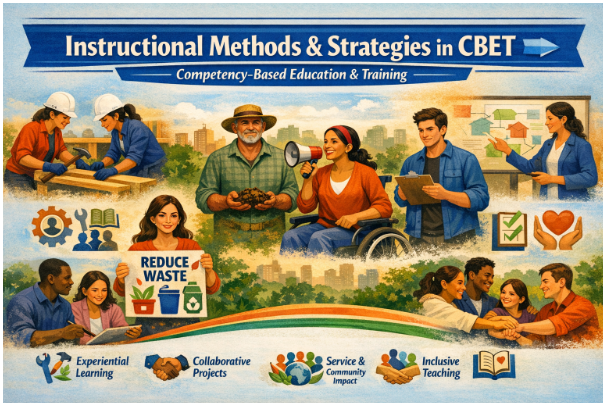
Course Purpose
This course aims to equip learners with essential knowledge and practical skills in instructional methods and strategies for Competency-Based Education and Training (CBET). It covers learner-centered teaching techniques, competency-based instructional planning, active learning approaches, technology integration, and professional values to enhance effective, inclusive, and accessible CBET delivery.
Course Learning Outcomes
CLO 1: Recall key concepts of learner-centered teaching techniques relevant to CBET.
CLO 2: Interpret competency-based instructional planning principles to align with specific learning outcomes.
CLO 3: Apply active learning strategies to facilitate engagement in CBET classroom environments.
CLO 4: Transfer knowledge of technology integration to enhance accessibility and effectiveness in diverse CBET delivery contexts.
Course Content
Foundations of Competency-Based Education and Training (CBET): Definition and principles of CBET, Historical development and global perspectives, Distinction between CBET and traditional education models, Benefits and challenges of CBET in diverse contexts. Principles of Learner-Centered Teaching, Characteristics of learner-centered pedagogy, Roles of teacher and learner in CBET, Strategies for fostering autonomy and responsibility, Inclusivity and equity in learner-centered approaches. Instructional Planning for Competency Achievement: Components of instructional planning in CBET, Aligning competencies with learning outcomes, Structuring lessons for competency attainment, Incorporating flexibility and adaptability in plans. Designing Learning Outcomes and Assessment Criteria: Writing measurable learning outcomes using Bloom’s Taxonomy, Differentiating factual, conceptual, practical, and metacognitive outcomes, Authentic assessment methods in CBET, Rubric development and alignment with competencies. Active Learning Strategies in CBET Classrooms: Cooperative and collaborative learning techniques, Problem-based and project-based learning, Role-play, simulations, and case studies, Strategies for engaging diverse learners. Facilitation Skills for Engaged Learning: Effective questioning techniques, Managing group dynamics and participation, Feedback and scaffolding for learner growth, Reflective facilitation practices. Technology Integration in CBET Delivery: Digital tools for instructional planning and delivery, E-learning platforms and blended learning models, Assistive technologies for inclusivity, Ethical and professional use of technology in education. Professional Values and Ethical Practice in Instruction: Core values in teaching: fairness, respect, integrity, Ethical dilemmas in CBET practice, Professional conduct and reflective practice, Building trust and accountability in instructional settings. Evaluation and Reflection on Instructional Effectiveness: Methods of evaluating instructional strategies, Self-assessment and peer review in teaching practice, Continuous improvement through reflection, Linking evaluation to learner outcomes and competencies. Transferring Knowledge Across Contexts in CBET Practice: Metacognitive strategies for knowledge transfer, Applying CBET principles in varied educational settings, Adapting instructional methods to workplace training, Lifelong learning and professional growth in CBET