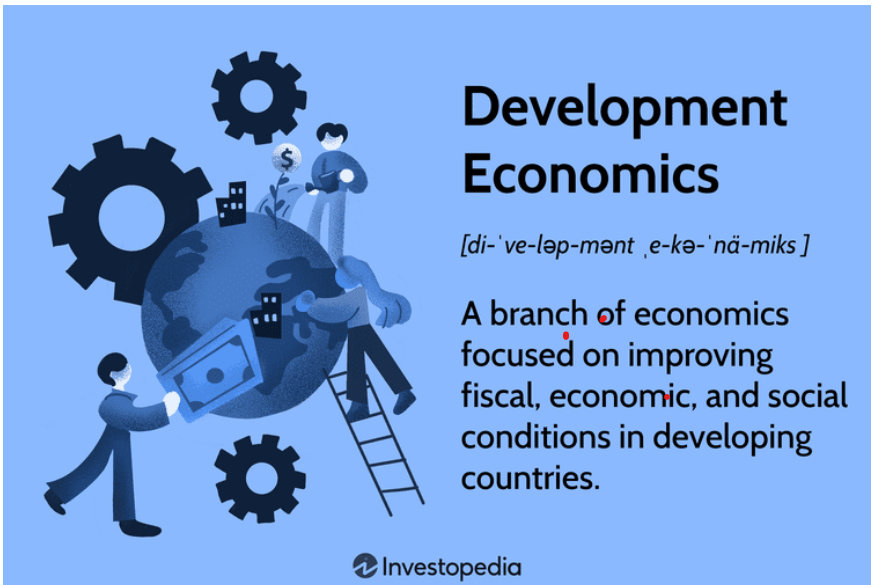
Welcome to this course on Development Economics. This course introduces learners to the major concepts, theories, and strategies that explain economic growth, development, poverty reduction, industrialization, and structural transformation in developing countries. The course examines how nations move from low levels of income and productivity toward higher standards of living and sustainable economic progress.
Throughout the course, learners will explore the meaning and measurement of economic growth and development, the causes of underdevelopment, and the factors that influence economic transformation. Attention is also given to challenges such as poverty, unemployment, migration, inequality, weak institutions, and resource constraints that affect development outcomes in many countries.
The course further examines classical and modern theories of economic development, including balanced and unbalanced growth models, dual-sector models, and development planning approaches. Learners will also study economic development strategies adopted by Less Developed Countries (LDCs) and evaluate their effectiveness in promoting industrialization, employment creation, and income distribution.
By the end of the course, learners should be able to analyze development problems, evaluate development policies and theories, and propose practical solutions for promoting inclusive and sustainable economic growth.