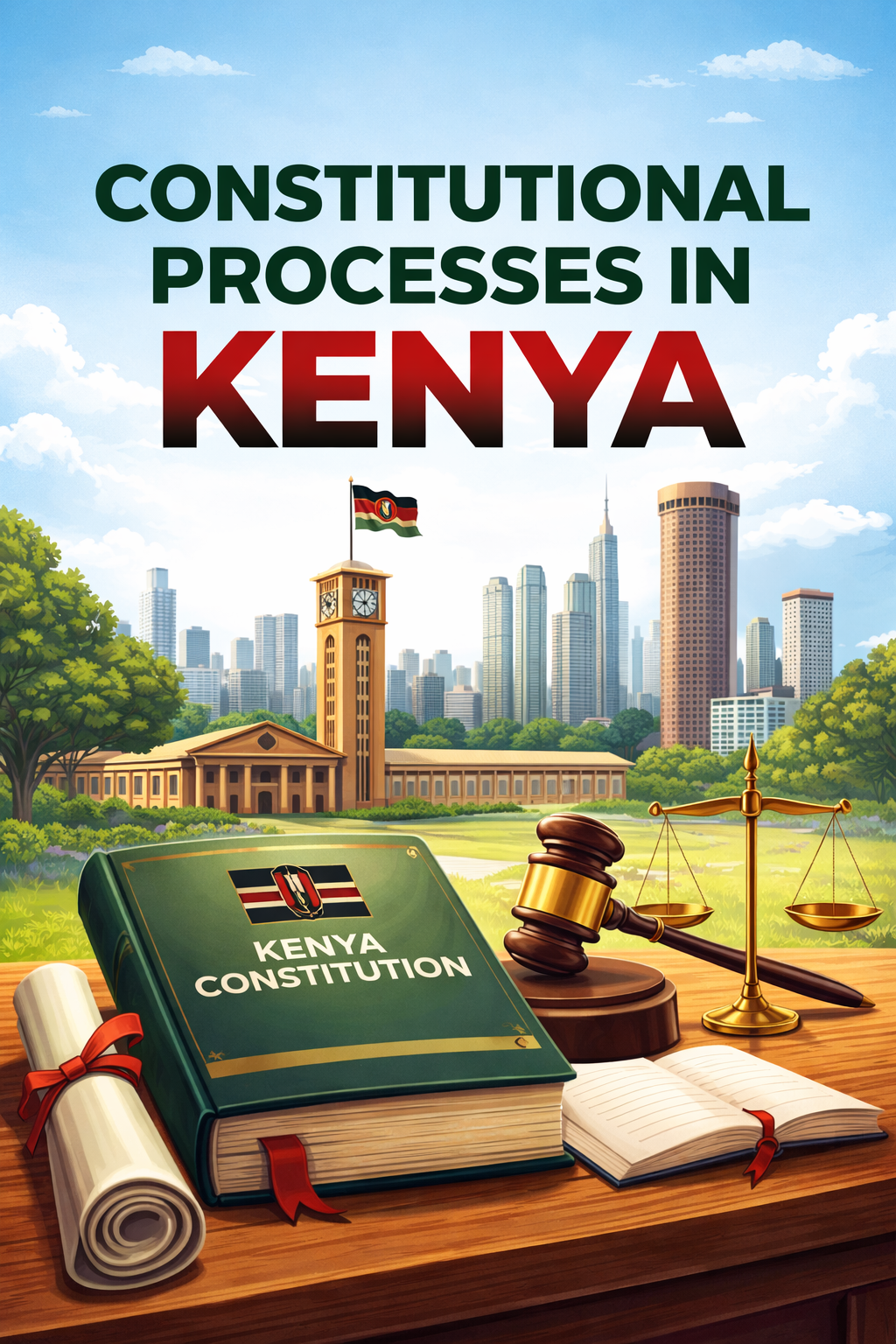
Course Purpose
This course provides you with a foundational understanding of the legal, historical and political constitutional processes in Kenya, while equipping you with the knowledge, skills, and critical thinking capacity necessary to apply what you learn to decipher the current and evolving governance dynamics in the country.
Course Learning Outcomes
CLO 1 Explain the historical, political, and legal foundations that have shaped Kenya’s constitutional framework.
CLO 2 Analyze the structures of governance established by the 2010 Constitution, including the distribution of power, human rights protections, and devolution.
CLO 3 Assess the challenges and successes in the implementation of constitutional provisions, with specific reference to devolution, judicial independence, and electoral processes.
CLO 4 Evaluate the role of the Constitution in promoting democratic principles, justice, and good governance in Kenya, demonstrating a commitment to the values of equality, human rights, and civic engagement.
Course Content
Historical Foundations of Kenya’s Constitution
Pre-colonial Governance and Indigenous Legal Systems; The Impact of Colonial Rule on Kenya’s Legal and Political Structure; The Independence Constitution and Its Evolution; Constitutional Reforms Leading to the 2010 Constitution.
Political Influences on Kenya’s Constitutional Development
The Role of Political Movements in Shaping the Constitution; Key Political Figures and Their Contributions to Constitutional Reforms; Multi-Party Politics and the Push for a New Constitutional Order; The Impact of Political Crises on Constitutional Amendments.
Legal Frameworks and Principles of the 2010 Constitution
The Supremacy of the Constitution and Rule of Law; Fundamental Rights and Freedoms Under the Bill of Rights; Separation of Powers Among the Executive, Legislature, and Judiciary; The Role of Constitutional Commissions in Governance.
The Structure of Government Under the 2010 Constitution
The Executive: Powers, Functions, and Limitations; The Legislature: Composition, Law-making Process, and Oversight Role; The Judiciary: Independence, Structure, and Functions; Inter-Governmental Relations and Power Distribution.
Devolution and Local Governance in Kenya
The Rationale and Objectives of Devolution; Structure and Functions of County Governments; Financial and Administrative Challenges in Devolved Units; Impact of Devolution on Service Delivery and Development.
Human Rights and Constitutional Protections
Key Provisions in the Bill of Rights; Mechanisms for Protecting Human Rights and Freedoms; Landmark Cases on Human Rights Under the 2010 Constitution; The Role of Civil Society and Human Rights Organizations.
Judicial Independence and Constitutional Interpretation
The Role of the Judiciary in Upholding the Constitution; The Supreme Court and Constitutional Interpretation; Judicial Reforms and Challenges in Ensuring Independence; High-Profile Cases That Have Shaped Kenya’s Jurisprudence.
Electoral Systems and Democratic Processes
Evolution of Kenya’s Electoral System; The Role of the Independent Electoral and Boundaries Commission (IEBC); Election Disputes and the Role of the Judiciary; Electoral Reforms and Challenges in Strengthening Democracy.
The Role of the Constitution in Good Governance and Democracy
Constitutional Principles of Transparency, Accountability, and Equity; Public Participation in Governance and Decision-Making; The Impact of the Constitution on National Cohesion and Stability; Future Constitutional Reforms and Their Implications for Kenya.
Challenges in Implementing the 2010 Constitution
Political Resistance and Constitutional Amendments; Corruption and Its Impact on Governance Structures; Public Participation and the Challenges of Civic Engagement; Financial Constraints and Administrative Bottlenecks in Devolved Units.