Course Purpose
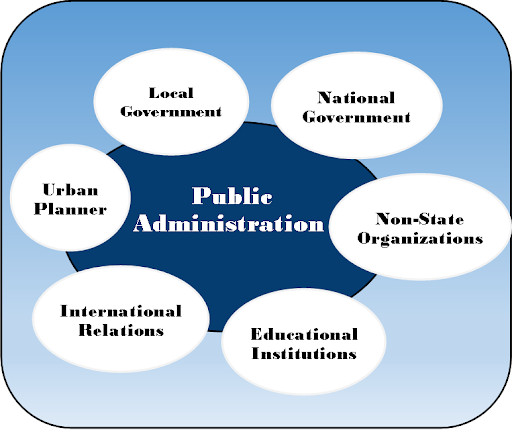
This course provides a comprehensive introduction to the field of public administration, defining its purpose, history, and key concepts. You will understand the role of public administration in government and society, as well as how public administration interacts with political, economic, and social systems.
Course Learning Outcomes
By the end of the course, the learner should be able to:
Describe key concepts, theories, and models of public administration, including its historical development and evolution, with a focus on both global and African contexts.
Analyze the roles and functions of public administrators, and assess the impact of public administration on governance, service delivery, and development, especially in the African context.
Apply the principles of public administration to real-world case studies and policy issues, identifying key challenges and proposing feasible solutions within the African socio-political context.
Develop a professional and ethical attitude towards public service, including the importance of transparency, accountability, and responsiveness in governance.
Course Content
Introduction to Public Administration: Definition, scope, and importance of public administration, Evolution of public administration globally and in Africa, Key concepts: governance, bureaucracy, public service;
Theories and Models of Public Administration: Classical and contemporary theories: Scientific Management, Human Relations, New Public Management, Public administration in the African context, Comparative analysis of administrative models;
Public Administration and Governance: The role of public administration in democratic governance, Public policy formulation and implementation, Decentralization and local governance;
The Structure and Organization of Government: Types of public organizations and their functions, Organization of public services: ministries, departments, agencies,Public-private partnerships in service delivery;
Public Policy and Decision Making: The public policy process: formulation, implementation, and evaluation, Decision-making theories and models, Policy analysis and the role of public administrators in policy development;
Leadership and Management in Public Administration: Leadership styles in public administration The role of public administrators as leaders, Managerial functions in public organizations;
Ethics and Accountability in Public Administration: Ethical challenges in public service, Accountability mechanisms in public administration, Anti-corruption measures and transparency in government;
Public Service Delivery and Development: Service delivery models and best practices, The role of public administration in economic development, Challenges in service delivery in African countries;
Human Resource Management in the Public Sector: Recruitment, training, and development in public organizations, Public sector employee rights and welfare, Managing diversity and gender equality in the public sector;
Current Issues in Public Administration: Contemporary challenges in public administration: globalization, technology, and governance, The role of public administration in addressing climate change and other global issues, Emerging trends and reforms in African public administration.