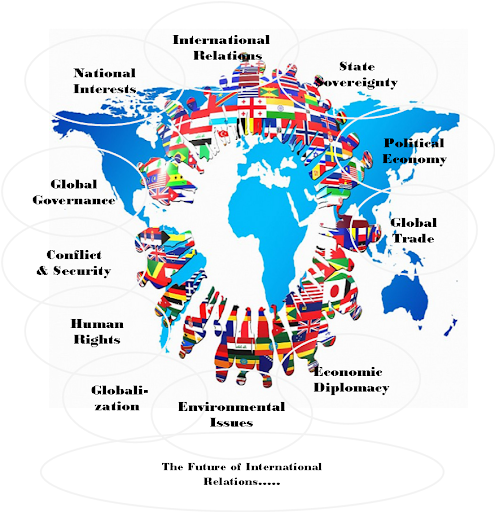
Course Purpose
This module aims to equip the learners with a strong theoretical framework for understanding international relations, focusing on foundational concepts that inform the study of global politics. The learner will be able to acquire knowledge to analyze and understand future international events, produce coherent and well-substantiated arguments, and express ideas confidently, thoughtfully, and respectfully as they work with others in the exploration of relevant political content.
MODULE DESCRIPTION
This module offers an essential foundation for you as you pursue a career in international relations, providing the necessary theoretical and practical tools to navigate the complexities of global politics.
Course Learning Outcomes
By the end of the course, the learner should be able to:
i. Describe the key concepts, theories, and historical development of international relations.
ii. Analyze current international events using different theoretical frameworks to demonstrate a critical understanding of global politics.
iii. Apply the basic principles of realism, liberalism, and constructivism to analyze international events.
iv. Demonstrate an awareness of the importance of critical thinking in analyzing global political dynamics.
Course Content
Introduction to International Relations: Overview of the field of international relations, History and evolution of the international system, Key concepts and terms in IR (e.g., sovereignty, diplomacy, global governance);
Some Theories of International Relations: Realism, Liberalism, and Idealism;
International Actors; Role of international law in state relations;
Global Security and Conflict: Concepts of security, war, and peace and Causes;
International Political Economy: Overview of global trade, finance, and development;
Global Environmental Issues: Environmental challenges: climate change, resource management;
International Diplomacy and Foreign Policy: Introduce diplomacy and Foreign policy;
Definition and dynamics of globalization, Transnational issues: migration, terrorism, health pandemics; Regionalism.