Course Purpose
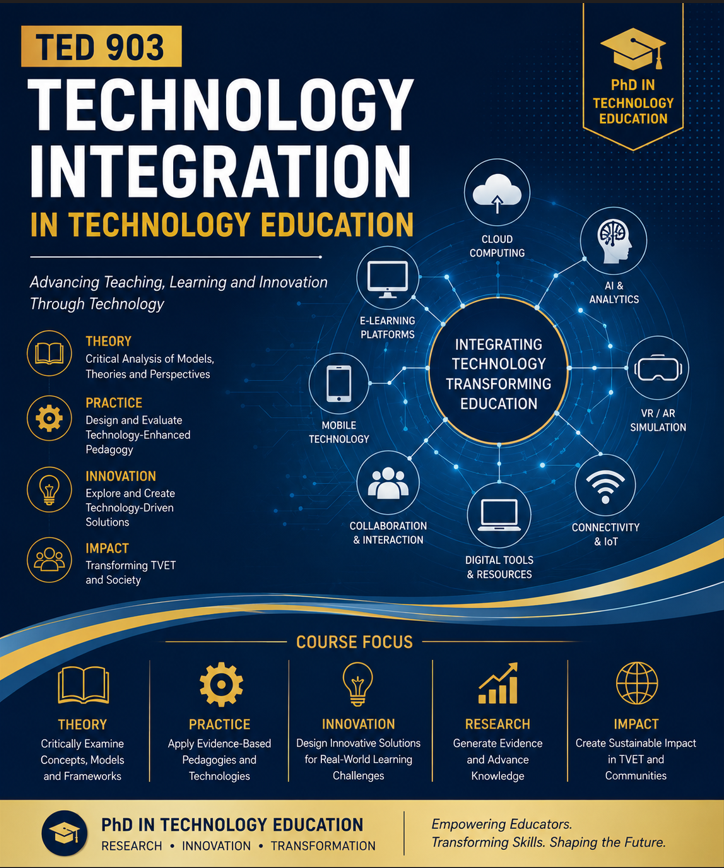
The purpose of this course is to develop advanced knowledge and research competence for critically analyzing and evaluating technology integration in Technology Education and TVET. It prepares doctoral scholars to design innovative, evidence-based technology integration strategies that enhance teaching, learning, skills development, research, and educational transformation.
Course Learning Outcomes
CLO 1: Critically analyze theories, models and contemporary perspectives underpinning technology integration in Technology Education and TVET.
CLO 2: Evaluate the effectiveness and implications of emerging technologies and technology-enhanced pedagogical approaches in Technology Education.
CLO 3: Develop innovative, evidence-based technology integration strategies, curricula and learning environments for Technology Education.
CLO 4: Conduct and disseminate rigorous research that generates new knowledge and contributes to the advancement of technology integration in Technology Education.
Course Content
Introduction to Technology Integration in Technology Education: Importance of technology in Technology
Education, Historical perspectives and evolution of educational technology. Theoretical Frameworks: Theories of technology adoption and integration, Models of technology-enhanced learning (SAMR, TPACK), Research on technology integration in Technology Education. Digital Literacy and Competency in Technology Education: Digital literacy and digital competence, assessing digital literacy levels among Technology Education educators and learners, Strategies to enhance digital skills in Technology Education. Technology-Enhanced Curriculum Development: Designing technology-enhanced TVET curricula, Incorporating digital tools and resources in teaching and learning, Case studies of successful technology-integrated TVET programs. Pedagogical Approaches in Technology-Enhanced Technology Education. Blended and online learning models, Interactive and collaborative learning tools, m Enhancing practical skills training with technology. Learning Management Systems (LMS) and Platforms: LMS and e-learning platforms, Implementing and managing LMS in TVET institutions, Best practices for online course delivery. Emerging Technologies in Technology Education: Virtual and augmented reality in skills training, Artificial intelligence and machine learning applications, Internet of Things (IoT) and smart classrooms. Evaluating the Impact of Technology in Technology Education. Methods for assessing the effectiveness of technology integration, Data analytics and learning analytics in Technology Education, Impact on student engagement, retention, and outcomes. Challenges and Barriers to Technology Integration: Technical, financial, and infrastructural challenges, Resistance to change and digital divide issues. Developing strategies to overcome barriers. Policy and Strategic Planning: Developing technology integration policies for Technology Education, Strategic planning for sustainable technology adoption, Funding and resource allocation for technology initiatives. Future Trends and Innovations: Trends shaping the future of technology in Technology Education, Innovations in educational technology, Preparing for the future: Skills and competencies for educators. Research Project and Presentations: Conducting research on a relevant topic in technology integration, Presenting research findings, Peer review and feedback.