Introduction to Hadith. Definition and significance of Hadith in Islam. Distinction between Hadith and Quran. Historical development of Hadith literature; collection of the hadith; compilation; transmission; preservation of hadith; Preliminary terminologies of the Hadith studies; Hadith Qudsi, Hadith Nabawi, difference between Hadith Qudsi and Hadith Nabawi, Matn and Sanad; Classification of Hadith. Types of Hadith: Sahih, Hasan, Da'if, Mawdu'. Categories based on content: Ahad, Mutawatir. Significance of classification in Islamic scholarship. Sources of Hadith. Primary sources: Sahih al-Bukhari, Sahih Muslim, Sunan Abu Dawood. Secondary sources: Muwatta Malik, Musnad Ahmad. The role of scholars in compiling Hadith collections. Chain of Transmission (Isnad). Understanding Isnad and its importance. Key figures in Hadith transmission. Evaluating the reliability of transmitters. Principles of Hadith Criticism. Criteria for authenticity (Jarh and Ta'dil). Major scholars and their contributions to Hadith criticism. Contemporary approaches to Hadith studies. The Role of Hadith in Islamic Jurisprudence. Hadith as a source of law (Shari'ah). The relationship between Hadith and Quranic verses. Case studies of legal rulings derived from Hadith. Hadith and Ethics. Moral teachings in Hadith. Hadith on social justice, compassion, and community. Application of Hadith in resolving modern ethical dilemmas. Contemporary Issues in Hadith Studies. The role of Hadith in interfaith dialogue. Critiques and controversies surrounding Hadith authenticity. Digitalization and accessibility of Hadith texts.
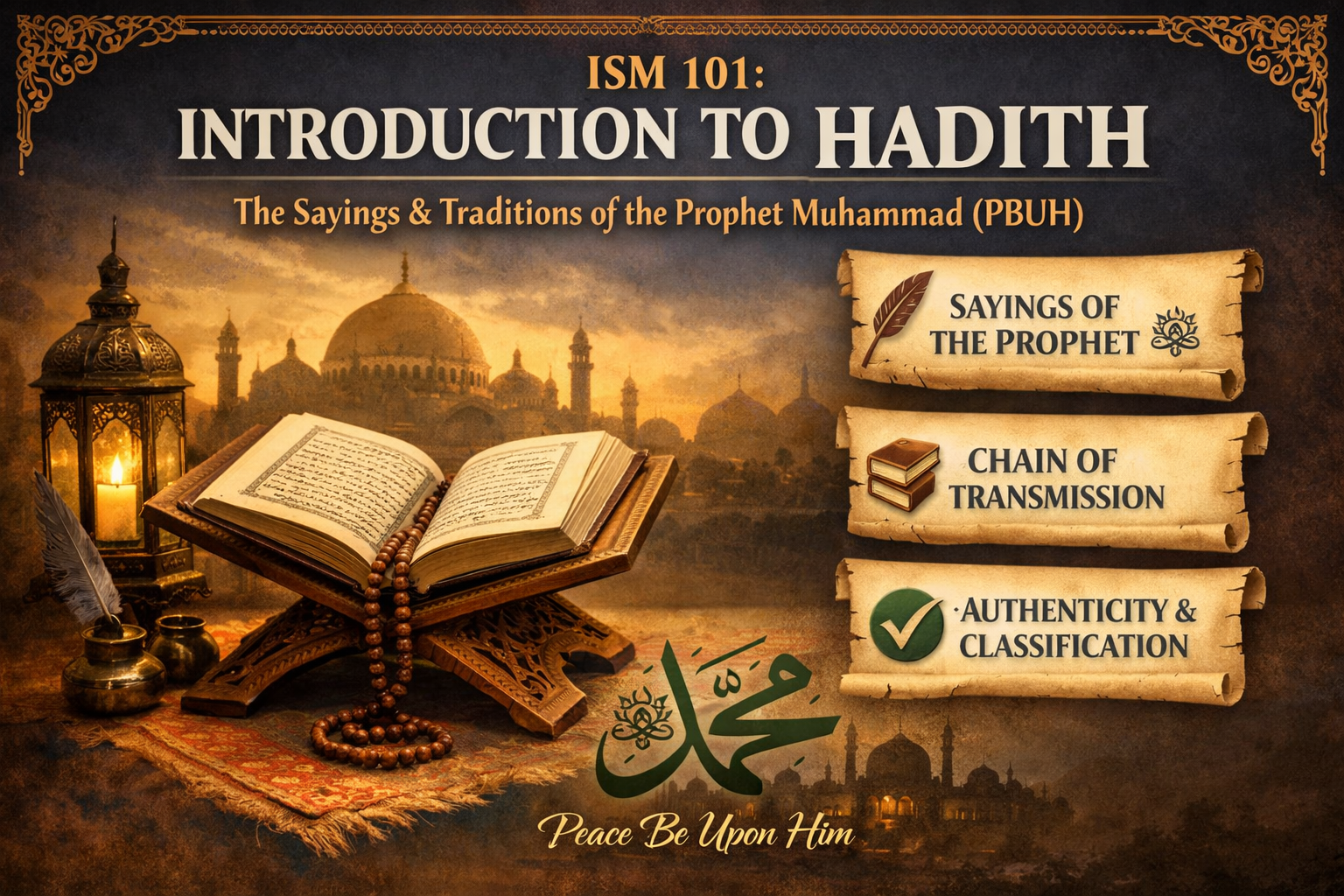
ISM 101: Introduction to Hadithi
Introduction to Hadith. Definition and significance of Hadith in Islam. Distinction between Hadith and Quran. Historical development of Hadith literature; collection of the hadith; compilation; tra...