Course Purpose
This course is to provide the learner with a practical and action-oriented approach to understanding the key principles of effectuation. Additionally, it introduces the learner to the process of starting and launching a new venture. Further, the course aims to provide participants with a deep understanding of how effectuation differs from traditional approaches to entrepreneurship and how it can be used to identify, evaluate, and pursue business opportunities. The course also equips learners with the skills and knowledge necessary to build a team of stakeholders and successfully launch new ventures.
Course Learning Outcomes
By the end of this course, you should able to:
Identify and explain core principles of effectuation and contrast them with traditional approaches to entrepreneurship.
Explain effectuation principles to evaluate and pursue business opportunities.
Apply the effectuation framework to minimize financial and non-financial risks
Develop a viable business plan and stakeholder network using effectuation principles.
Course Content
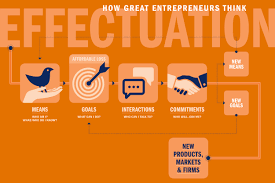
This course is designed to immerse you in the practical logic of effectuation, a powerful approach to entrepreneurship that emphasizes adaptability, resourcefulness, and co-creation. Rather than relying solely on prediction and rigid planning, effectuation equips you with principles that help entrepreneurs act under uncertainty, using the means at their disposal to shape opportunities and ventures.
The modules in this course will include:
Introduction to Effectuation. This opening module introduces the foundations of effectuation, its origins, and the distinction between causal and effectual reasoning.
The Bird-in-Hand Principle leveraging personal means, identifying immediate opportunities, and case examples of entrepreneurs applying this principle.
The Affordable Loss Principle. This module focuses on evaluating opportunities based on what you can afford to lose rather than expected returns. Risk management through effectual logic, setting affordable loss thresholds, and practical exercises in decision-making.
The Crazy Quilt Principle explores how partnerships and stakeholder commitments shape ventures collaboratively. Subtopics include building networks, co-creation strategies, and mapping stakeholder engagement.
The Lemonade Principle emphasizes embracing surprises and turning setbacks into opportunities.
The Pilot-in-the-Plane Principle proactive decision-making, and exercises in entrepreneurial leadership.
Resource Acquisition and Management in Effectuation covers creative strategies for mobilizing and managing resources. Learners explore improvisation, bootstrapping, and case studies on resource management under constraints.
Problem-Solving with Effectuation include scenario-based exercises, adaptive problem-solving, and comparisons between effectual and causal approaches.
Entrepreneurial Mindset and Culture. This module develops the mindset necessary for effectual entrepreneurship. The focus will be on influences on decision-making, resilience, adaptability, and collaboration skills.
The Future of Effectuation The final module explores emerging research, global trends, and the evolving role of effectuation in entrepreneurship. This will include digital entrepreneurship, sustainability-focused ventures, and the integration of effectuation into policy and practice.